














TL;DR
July can be a great time to enjoy fresh air, gentle movement, and time outside, but safe outdoor exercise for seniors starts with the right pace, the right timing, and the right environment. For many older adults, the safest routine is one that balances activity with shade, hydration, rest, and support.
A supportive assisted living community can make that balance easier. When daily logistics, meal prep, transportation, and safety concerns feel lighter, it is often easier to stay active, connected, and confident.
What you’ll learn:
- How warm-weather activity can support strength, mood, balance, and routine
- What makes outdoor exercise safer for older adults during July heat
- Practical outdoor activity ideas that do not require high intensity
- How assisted living can support active aging with less day-to-day stress
Why Safe Outdoor Exercise For Seniors Matters In July
Outdoor movement can feel more inviting in July because longer days and brighter mornings make it easier to get outside. A short walk, time in a garden, or a gentle stretching class on a patio can support energy, sleep, mood, and social connection. The National Institute on Aging notes that physical activity is an important part of healthy aging, and it does not have to mean high-intensity workouts to be meaningful.
That said, summer movement is not just about doing more. It is about doing the right amount in the right setting. The CDC explains that adults age 65 and older are more prone to heat-related health problems, which is one reason July routines need a little more planning than spring or fall routines.
For many older adults, the goal is not athletic performance. It is preserving stamina, balance, confidence, and enjoyment. That is one reason we often encourage people to think about movement as part of a whole lifestyle. In Assisted Living, support with meals, medication management, transportation, and daily routines can leave more energy for the parts of the day that feel meaningful, including safe physical activity.
What Makes Outdoor Exercise Safer For Older Adults
The first piece is timing. Midday heat can be draining even for healthy adults, and it can become more risky with age, especially for people living with heart, lung, or kidney concerns or taking medications that affect hydration or temperature regulation. Early morning or later evening is often the safest window for outdoor activity in July. Even then, comfort matters. If the air already feels heavy, a lighter plan may be the better one.
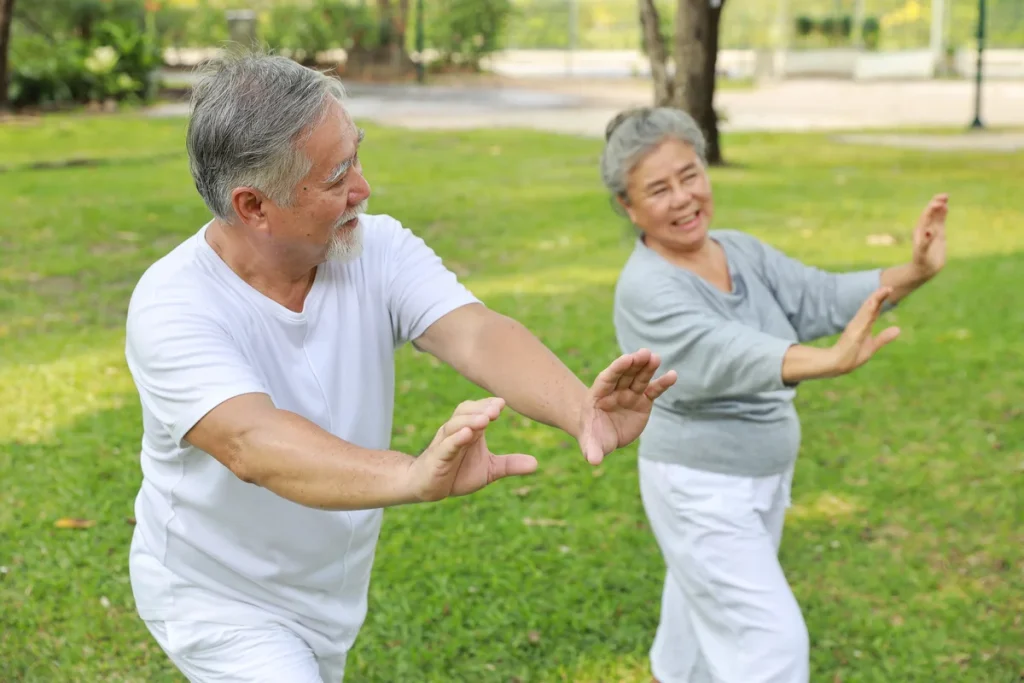
The second piece is intensity. Safe outdoor exercise for seniors usually starts with steady, moderate activity that allows for conversation and regular rest. A slow walk with breaks, seated stretching in the shade, gentle tai chi, or light gardening may be easier to tolerate than a long walk in direct sun. The National Institute on Aging’s hot weather safety guidance also points older adults toward hydration, cool environments, and extra caution during high temperatures.
The third piece is preparation. Supportive shoes, sun protection, water, a hat, and a plan for when to stop all matter. Older adults do best when the activity itself feels simple and the setup is not complicated. That may sound small, but it often makes the difference between a routine that lasts and one that gets abandoned after a week.
A few practical safety checks can help before any July outing:
- Choose shaded routes or covered outdoor spaces when possible.
- Bring water and pause before you feel worn out.
- Wear supportive shoes with good traction.
- Move activity indoors if the heat, air quality, or humidity feels uncomfortable.
- Ask a health care provider about exercise precautions if there is dizziness, chest discomfort, or a recent health change.
Outdoor Activity Ideas That Fit July Better

Not every older adult wants the same kind of movement, and that is a good thing. A safe routine is usually one that feels realistic and enjoyable. Walking remains one of the easiest options because it can be adjusted in length, pace, and setting. A ten-minute walk before breakfast may be more sustainable than a long afternoon outing.
Gardening is another strong fit for July when it is done in short sessions. It combines light movement, focus, fresh air, and a sense of purpose. For some people, standing balance exercises on a patio or porch are a better match than walking. Others may prefer stretching, seated movement, or simple strength work outdoors in a breezier part of the day.
Social activity can help, too. We have seen that people often stick with movement more consistently when it feels connected to companionship or routine. That is one reason Life Enrichment matters. Programs that include fitness, creative activity, social connection, and outdoor time can make wellness feel more natural and less like a chore.
If you want a few more gentle ideas, our articles on the health benefits of outdoor activities for seniors and easy exercises for older adults can help you think through what feels realistic for your routine.
How Assisted Living Can Support Active Aging
One of the biggest barriers to outdoor activity is not motivation. It is friction. Meals need to be made. Rides need to be arranged. Medication schedules may interrupt the day. A person may not feel confident going out alone. When those small barriers add up, staying active can start to feel harder than it should.
That is where a supportive community environment can make a real difference. In our Assisted Living communities, older adults can have help with daily tasks while still keeping choice at the center. That support can create more room for a morning walk, a group outing, time on a patio, or a fitness class that feels manageable instead of overwhelming.
This matters for proactive planners because the question is often not only, “Can I stay active today?” It is also, “What kind of environment will help me keep doing this six months from now?” A setting that supports routine, social connection, and whole-person wellness may make it easier to maintain healthy habits over time.
When It Is Smarter To Move Indoors
July activity plans should stay flexible. There are days when the safest choice is not to push through. If the temperature is high, the humidity feels heavy, the air quality is poor, or you feel more tired than usual, indoor movement may be the better plan. A hallway walk, chair exercises, indoor stretching, or a fitness class can still support consistency without adding unnecessary risk.
It is also important to pay attention to warning signs. Feeling dizzy, confused, unusually weak, or short of breath during outdoor activity is a sign to stop and cool down right away. Health changes, medication adjustments, and recent illness can change what feels manageable outdoors. What worked last July may not be the right fit this July.
The goal is not perfection. It is staying engaged in ways that protect both independence and well-being. For many older adults, the best July routine is one that blends outdoor enjoyment with enough structure and support to keep it sustainable.
A supportive next step
If you are looking for a community that supports active living with the right balance of help, wellness, and daily choice, Schedule a Visit to explore how Elder Care Alliance can support healthy routines in every season.